In a cardiac emergency, the actions taken in the first few minutes determine whether a patient survives. For healthcare professionals, CPR and Basic Life Support certification are not optional credentials — they are the foundation of clinical readiness and a requirement for employment across virtually every patient-facing role. As emergency response standards continue to evolve, the demand for trained, certified providers grows alongside them. CPR St. Louis is a trusted American Heart Association training site that has built a strong reputation among St. Louis-area healthcare professionals for credible certification, experienced instruction, and a hands-on learning environment that prepares providers to perform when it matters most.
Why CPR and BLS Certification Matters in Healthcare
Life-Saving Skills in Critical Situations
The window for effective intervention in cardiac arrest is narrow. Brain injury begins within four to six minutes of cardiac arrest, and survival rates decline by approximately seven to ten percent for every minute that passes without CPR or defibrillation. Healthcare providers who can deliver immediate, high-quality CPR and operate an AED confidently are directly responsible for improving those odds. BLS training prepares providers not just to respond, but to respond correctly — with proper compression depth, adequate rate, minimal interruptions, and effective ventilation.
CPR and BLS skills apply beyond cardiac arrest as well. Choking response, respiratory arrest management, and team-coordinated resuscitation are all addressed in BLS training. These competencies are used across emergency departments, ICUs, surgical suites, outpatient clinics, and long-term care settings every day.
Required Credentials for Healthcare Professionals
Current BLS certification is a standard condition of employment across the healthcare industry. Hospitals, health systems, outpatient clinics, and long-term care facilities require providers to maintain an unexpired AHA BLS card as part of their credentialing file. Nurses, physicians, EMTs, paramedics, respiratory therapists, dental professionals, and allied health workers all fall under this requirement. For many, allowing certification to lapse means being removed from patient care duties until compliance is restored — a disruption that affects both the provider and the clinical team.
State licensing boards and professional credentialing organizations increasingly incorporate BLS currency into their standards as well. Maintaining an active certification is both a professional obligation and a practical safeguard against compliance gaps.
Keeping Skills Updated
The American Heart Association updates its resuscitation guidelines periodically to reflect emerging clinical evidence. Each update may introduce changes to compression ratios, ventilation protocols, medication recommendations, or team-based resuscitation procedures. The two-year recertification cycle ensures that providers are trained to the current standard rather than practicing techniques that have been revised or replaced. Hands-on renewal also reinforces muscle memory, which deteriorates without regular practice regardless of a provider’s clinical experience.
Why Healthcare Professionals Trust CPR St. Louis
American Heart Association Certified Training Site
CPR St. Louis is an authorized AHA training site, which means every course is delivered using the official AHA curriculum and results in a certification card that is accepted by hospitals, health systems, licensing boards, and employers nationwide. AHA certification is the recognized gold standard in resuscitation training. Providers who certify through CPR St. Louis can present their credentials with confidence, knowing they will satisfy any professional requirement they encounter.
Experienced, Professional Instructors
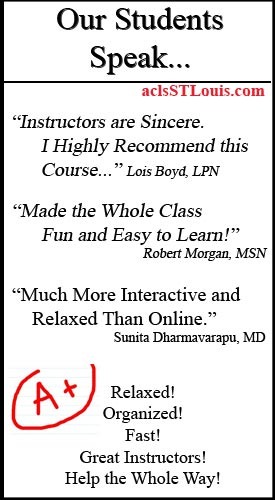
Every course at CPR St. Louis is taught by certified instructors who bring direct clinical and emergency response experience into the classroom. This real-world background allows instructors to contextualize protocols, answer questions with clinical depth, and offer insight that goes beyond what a manual provides. The teaching approach is student-focused and supportive — instructors are invested in participant success and create an environment where providers can ask questions and refine technique without feeling judged or rushed.
Stress-Free, Hands-On Learning Environment
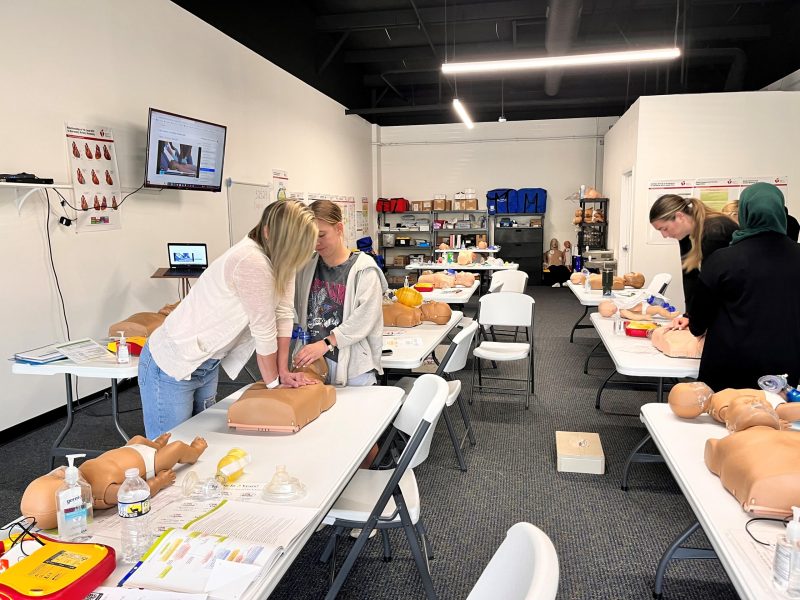
CPR St. Louis designs its courses around practical skill development rather than passive content delivery. Participants spend the majority of class time actively performing skills at practice stations and working through simulated emergency scenarios. This structure mirrors the real clinical situations providers are being trained to handle. The result is a learning experience that builds genuine competence and the confidence to act decisively under pressure — not just familiarity with a written protocol.
Same-Day Certification Cards
Upon successfully completing the course, participants receive their AHA certification card the same day. There is no waiting period and no uncertainty about when credentials will arrive. For providers working against a credentialing deadline or an upcoming employment start date, same-day certification is a practical and meaningful advantage.
Courses Offered at CPR St. Louis
BLS for Healthcare Providers
BLS for Healthcare Providers is the foundational certification course for clinical professionals. It is designed for nurses, physicians, EMTs, paramedics, respiratory therapists, dental staff, and medical and nursing students. Core skills include high-quality CPR for adults, children, and infants, AED operation, bag-mask ventilation, choking relief, and team-based resuscitation with closed-loop communication. Certification is valid for two years and meets the requirements of virtually all healthcare employers and credentialing bodies.
ACLS Certification
Advanced Cardiovascular Life Support certification is required for providers working in high-acuity clinical environments, including emergency departments, intensive care units, and operating rooms. The ACLS curriculum builds on BLS fundamentals and introduces advanced clinical competencies:
- Advanced airway management — supraglottic airways, ventilation strategy, and technique
- ECG rhythm interpretation — identifying shockable rhythms, bradycardia, and tachycardia
- Pharmacology in resuscitation — appropriate use of epinephrine, amiodarone, and other medications
- Cardiac arrest algorithms — systematic management of VF, pulseless VT, PEA, and asystole
ACLS certification is valid for two years and is a standard credentialing requirement across most specialty care areas.
PALS Certification
Pediatric Advanced Life Support prepares providers to manage critically ill and injured infants and children. It is required for pediatric nurses, pediatric emergency physicians, neonatologists, PICU staff, and pediatric transport teams. The PALS curriculum addresses the distinct physiological differences between pediatric and adult patients, covering respiratory distress and failure, shock recognition and management, pediatric cardiac arrest, and the ABCDE systematic assessment framework. PALS certification is valid for two years.
CPR and First Aid Certification
CPR and First Aid courses serve both healthcare professionals and members of the general public who need foundational emergency response skills. This course is appropriate for teachers, coaches, parents, childcare workers, fitness professionals, and workplace safety designees. Skills covered include adult and child CPR, AED use, choking response, and first aid for common injuries and medical emergencies. It is an accessible entry point for anyone seeking to be better prepared for emergencies in their home, school, or workplace.
Key Benefits of Training with CPR St. Louis
Flexible Scheduling Options
CPR St. Louis offers weekday, evening, and weekend class times to accommodate the demanding schedules of healthcare professionals. Shift workers and providers managing complex personal schedules can find a class time that fits without sacrificing a day off or disrupting a clinical rotation.
Small Class Sizes
Class sizes are deliberately kept small to maximize the quality of instruction and hands-on practice time. A lower instructor-to-student ratio means participants receive more direct feedback, more time at each skill station, and a more personalized learning experience overall. Research consistently shows that smaller group sizes improve skill retention and assessment performance in emergency response training.
Modern Training Equipment
CPR St. Louis uses high-quality manikins and AED trainers that provide realistic tactile feedback during practice. Proper compression depth and rate can be felt and corrected in real time, and AED simulation allows participants to work through the full defibrillation sequence from recognition to shock delivery. Realistic equipment produces more confident and capable providers.
Central Location in St. Louis
A conveniently located training site reduces the logistical burden of getting certified. St. Louis-area healthcare professionals can reach CPR St. Louis without significant travel, making it easier to fit certification or renewal into a busy week.
Who Should Enroll in CPR and BLS Classes?
CPR and BLS certification is appropriate for a broad range of individuals across clinical and community settings:
- Nurses and nursing students preparing for clinical rotations
- Physicians, residents, and physician assistants in any specialty
- EMTs and paramedics maintain pre-hospital certification requirements
- Dental and surgical professionals working in procedural environments
- Medical assistants and caregivers supporting vulnerable patient populations
- Anyone pursuing a healthcare career that requires current AHA certification
What to Expect During Training
Course Structure
Each course combines targeted instructional content with extensive hands-on practice. Interactive learning modules introduce or review core concepts before participants move to skill stations where techniques are applied and assessed. The balance is weighted toward practical activity — providers learn by doing, not by watching.
Skills You Will Master
- High-quality chest compressions — correct depth, rate, hand placement, and full recoil
- Proper ventilation techniques — bag-mask seal, tidal volume, and compression-to-ventilation ratios
- AED operation — device activation, pad placement, rhythm analysis, and shock delivery
- Team-based resuscitation — role assignment, closed-loop communication, and coordinated response
Assessment and Certification
Course completion requires passing both a hands-on skills evaluation and a written examination. The skills assessment verifies that participants can perform each competency at the standard required by the AHA. Providers who complete both components receive their AHA certification card the same day.
How CPR St. Louis Stands Out
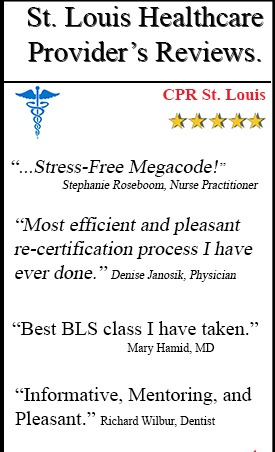
CPR St. Louis has earned its reputation among St. Louis-area healthcare professionals through consistent delivery of high-quality, practical training. The program’s emphasis on student confidence and real-world competence — rather than simply passing a test — produces providers who are genuinely prepared for clinical emergencies. High pass rates, strong local standing, and a substantial base of returning clients reflect the trust that the healthcare community places in this training site. For providers who want certification that means something, CPR St. Louis delivers.
Conclusion
CPR and BLS certification is a non-negotiable foundation for every healthcare professional, and the quality of that training has a direct bearing on clinical performance and patient outcomes. CPR St. Louis offers St. Louis-area providers a trusted, AHA-authorized path to certification that combines experienced instruction, hands-on skill development, flexible scheduling, and same-day credentialing.
Ready to take the next step in your medical career? CPR St. Louis makes it easy to get certified and stay compliant with the latest American Heart Association standards. Whether you need your CPR certification in St. Louis for the first time or are due for a renewal, our expert instructors are here to guide you every step of the way. Don’t wait — seats fill up fast! Register for BLS certification in St. Louis today and join the thousands of healthcare professionals who trust CPR St. Louis to keep their skills sharp and their patients safe.
Frequently Asked Questions (FAQs)
Q1: Who are CPR St. Louis CPR & BLS classes designed for? CPR St. Louis CPR and BLS classes are specifically designed for healthcare professionals, including nurses, physicians, EMTs, medical students, and allied health workers. However, anyone who wants to earn a credible, AHA-recognized certification is welcome to enroll. The courses are structured to meet both initial certification and renewal requirements.
Q2: Are the CPR and BLS certifications from CPR St. Louis accepted by hospitals and healthcare employers? Yes. CPR St. Louis is an official American Heart Association (AHA) training site, meaning all certifications issued — including BLS for Healthcare Providers, ACLS, and PALS — are nationally recognized and widely accepted by hospitals, clinics, and healthcare employers across the country.
Q3: How long does it take to complete a BLS certification class at CPR St. Louis? Most BLS for Healthcare Providers classes at CPR St. Louis are completed in just a few hours, making them ideal for busy healthcare professionals. The courses are hands-on and stress-free, focusing on practical skills so you can get certified efficiently without sacrificing the quality of your training.