Hospitals operate on a language of urgency. Coded announcements move through overhead speakers with calm efficiency, masking the intensity of what is happening behind closed doors. Few codes carry more weight than Code Blue.
Introduction
Hospital emergency codes exist to communicate critical situations quickly and discreetly. They allow staff to mobilize resources without creating panic among patients, visitors, and families in surrounding areas. Each code represents a specific type of emergency requiring a specific type of response.
Code Blue is among the most recognized of these designations. It is heard in hospitals worldwide and triggers an immediate, coordinated response from trained personnel. Understanding what it means — and what happens when it is called — matters for healthcare providers, patients, and families alike.
This article explains what Code Blue means, how serious it is, and why proper training is the foundation of every effective Code Blue response. Whether you are a healthcare professional seeking to reinforce your knowledge or a patient or family member seeking clarity, this overview provides the answers most commonly sought.
What is Code Blue in a Hospital?
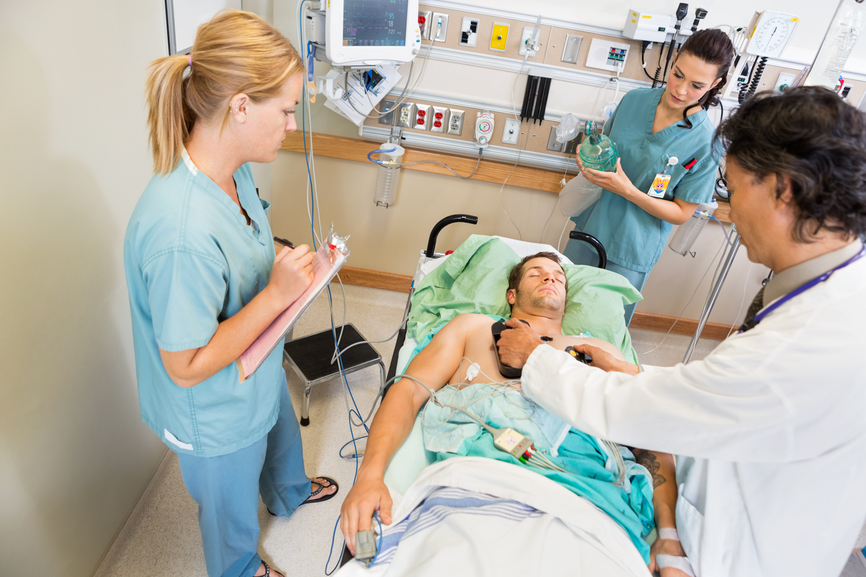
Code Blue is the emergency designation used in most hospitals to indicate a cardiopulmonary arrest or a life-threatening medical emergency requiring immediate resuscitation. It signals that a patient has experienced cardiac arrest, respiratory arrest, or both. The announcement activates a rapid response team trained specifically to manage these events.
When a Code Blue is called, a predetermined team converges on the patient’s location within minutes. This team typically includes physicians, nurses, respiratory therapists, and pharmacists. Each member arrives with a defined role and the equipment needed to begin resuscitation immediately.
The term itself has no universal statutory definition. Hospital systems adopt it as part of an internal color-code system that varies by institution. However, Code Blue as a designation for cardiac or respiratory arrest has become so widely adopted that it functions as a near-universal standard across healthcare settings in the United States and many countries internationally.
A Code Blue is announced through the hospital’s public address system with the code designation and the specific location. The announcement is brief, repeated, and delivered in a controlled tone. Staff respond based on their role — those trained in resuscitation move toward the location while others maintain care for surrounding patients.
The events that typically trigger a Code Blue include:
- Cardiac arrest — The heart stops beating effectively, and circulation ceases
- Respiratory arrest — Breathing stops while the heart may still be beating
- Sudden loss of consciousness — Unresponsiveness without a clear reversible cause
- Severe respiratory distress — Breathing so compromised that arrest is imminent without intervention
- Pulseless electrical activity (PEA) — Organized electrical activity on a cardiac monitor without a palpable pulse
Code Blue procedures vary by institution. Some hospitals differentiate between adult and pediatric codes. Others use Code Blue exclusively for adults and a separate designation, such as Code Pink, for pediatric emergencies. Staff are trained on their institution’s specific protocol during onboarding and through regular drills.
How Serious is a Code Blue?
Code Blue represents the highest level of medical urgency in a hospital setting. It indicates that a patient is either dying or on the immediate threshold of death. There is no more serious routine emergency designation in the hospital code system.
The response to a Code Blue is immediate and intensive. Response time targets vary by institution, but most protocols require the resuscitation team to reach the patient within two to three minutes of the announcement. Every minute without effective CPR and defibrillation reduces survival probability significantly.
The resuscitation team arrives with a crash cart — a mobile unit stocked with all the equipment and medications needed for advanced cardiac life support. Standard crash cart contents include:
- Defibrillator and AED — For rhythm analysis and electrical cardioversion or defibrillation
- Airway management equipment — Bag-valve masks, laryngoscopes, endotracheal tubes, and supraglottic airway devices
- Intravenous access supplies — Catheters, tubing, and fluids for establishing vascular access
- Emergency medications — Epinephrine, amiodarone, atropine, sodium bicarbonate, and others based on resuscitation algorithms
- Cardiac monitoring equipment — Continuous ECG monitoring to guide rhythm-based interventions
- Suction equipment — For airway clearance during resuscitation
The severity of a Code Blue is reflected in the resources deployed. Multiple trained providers, advanced equipment, and pharmacological intervention are all mobilized simultaneously. This level of response exists because the margin for error is zero and the window for effective intervention is measured in minutes.
Outcome data for in-hospital cardiac arrest provide important context. Research published in Resuscitation and data from the American Heart Association’s Get With The Guidelines registry indicate that survival to hospital discharge following in-hospital cardiac arrest is approximately 25 to 30 percent. Outcomes vary significantly based on the initial rhythm, time to defibrillation, quality of CPR, and the patient’s underlying condition.
Shockable rhythms — ventricular fibrillation and pulseless ventricular tachycardia — carry significantly better survival rates than non-shockable rhythms such as pulseless electrical activity and asystole. Early recognition and immediate high-quality CPR remain the strongest predictors of survival regardless of rhythm type.
Is Code Blue Life-Threatening?
Code Blue is by definition a life-threatening event. It is called specifically when a patient’s life is in immediate jeopardy without urgent intervention. Every Code Blue represents a situation where biological death is the outcome if the resuscitation team does not respond effectively.
Cardiac arrest, the most common trigger for a Code Blue, results in the cessation of effective circulation. Brain cells begin dying within four to six minutes of circulatory collapse. Without CPR to maintain perfusion and defibrillation to restore rhythm, irreversible brain damage and biological death follow rapidly.
The life-threatening nature of Code Blue extends beyond the immediate arrest event. Even patients who survive initial resuscitation face significant risks in the post-arrest period. Post-cardiac arrest syndrome — a complex physiological state following return of spontaneous circulation — affects multiple organ systems and requires intensive care management.
Risks in the post-arrest period include:
- Anoxic brain injury — Varying degrees of neurological damage resulting from the period of circulatory arrest
- Myocardial dysfunction — The heart muscle itself is injured by ischemia, and the resuscitation process
- Systemic ischemia-reperfusion injury — Organ damage resulting from the restoration of blood flow after a period of deprivation
- Hemodynamic instability — Blood pressure fluctuation requiring vasopressor support in the intensive care unit
- Recurrent arrest — Patients who achieve return of spontaneous circulation remain at elevated risk of re-arrest in the immediate post-resuscitation period
Targeted temperature management and post-resuscitation care protocols have improved neurological outcomes in survivors. The AHA recommends structured post-cardiac arrest care pathways, including coronary angiography where indicated, temperature management, and multimodal neurological prognostication.
For families, a Code Blue announcement concerning their loved one is one of the most distressing experiences a hospital environment produces. Clear, compassionate communication from the healthcare team — before, during, and after a Code Blue — is an essential component of patient and family-centered care.
Why Healthcare Providers Need Proper Training
A Code Blue response is only as effective as the training behind it. Equipment and protocols alone do not save lives — trained, coordinated human performance does. The difference between a resuscitation that achieves return of spontaneous circulation and one that does not is often a matter of training quality, team coordination, and individual skill maintenance.
Basic Life Support certification is the foundational requirement for all healthcare providers likely to respond to or witness a Code Blue. BLS establishes competency in high-quality chest compressions, rescue breathing, and AED use. It is the baseline skill set without which no higher-level intervention is possible.
Advanced Cardiovascular Life Support certification builds upon BLS with algorithm-based management of cardiac arrest rhythms, airway management, vascular access, and pharmacological intervention. ACLS is required for physicians, nurses, and other advanced providers who form the core of the Code Blue response team.
The case for continuous, high-quality training is supported by outcome data. Research consistently demonstrates that:
- CPR quality degrades rapidly without practice — Studies show measurable decline in compression depth and rate within months of certification without reinforcement
- Team coordination is a learned skill — High-performance resuscitation team dynamics do not emerge automatically from individual competence; they require deliberate team-based training
- Simulation improves real-world performance — Providers trained through high-fidelity simulation scenarios demonstrate faster response times and better adherence to resuscitation algorithms during actual events
- Debriefing accelerates improvement — Teams that conduct structured post-event review following Code Blue responses show measurable performance gains over time
- Cognitive load is reduced by training — Well-trained providers spend less mental energy recalling protocols and more on real-time clinical decision-making during the event
Regular Code Blue drills at the unit and institutional level are an essential component of preparedness. Drills expose gaps in equipment readiness, team communication, role clarity, and response time before a real event reveals them. The Joint Commission and other accrediting bodies evaluate hospitals on their emergency preparedness practices, including resuscitation readiness.
Beyond technical skill, training develops the psychological readiness needed to perform under the extreme stress of a real Code Blue. The emotional weight of resuscitating a patient — particularly one known to the care team — is significant. Simulation-based training creates a degree of stress inoculation that improves performance when the stakes are real.
Healthcare providers who respond to Code Blue events carry a profound responsibility. That responsibility is honored through continuous learning, regular skill practice, and an unwavering commitment to the highest standard of resuscitation care.
Frequently Asked Questions (FAQs)
FAQ 1: What triggers a Code Blue in a hospital?
A Code Blue is triggered when a patient experiences a sudden cardiac arrest or respiratory failure — meaning their heart has stopped beating, or they have stopped breathing effectively. Hospital staff, including nurses, physicians, and other personnel, can initiate a Code Blue by calling it over the intercom or pressing an emergency alert button. The goal is to rapidly assemble a trained response team to begin life-saving interventions such as CPR and defibrillation as quickly as possible.
FAQ 2: Who responds to a Code Blue, and what do they do?
When a Code Blue is announced, a dedicated rapid response or code team immediately rushes to the patient’s location. This team typically includes physicians, nurses, respiratory therapists, and pharmacists — all trained in Advanced Cardiovascular Life Support (ACLS). The team works in a coordinated effort: one provider performs chest compressions, another manages the airway, and others administer medications and operate a defibrillator. Every second counts, which is why ACLS training is critical for healthcare professionals.
FAQ 3: Can knowing CPR help during a Code Blue situation?
Absolutely. While Code Blue protocols are designed for hospital settings, cardiac arrests happen everywhere — at home, at work, and in public. Knowing CPR means you can act immediately before emergency services arrive, which can double or even triple a person’s chance of survival. Whether you’re a healthcare professional or a concerned community member, CPR certification prepares you to respond confidently and effectively in life-or-death moments.
Conclusion
Understanding what a Code Blue means goes far beyond hospital walls. It’s a powerful reminder of how fast a life-threatening emergency can unfold — and how critical it is to have trained, prepared responders nearby. In a hospital, Code Blue teams rely on advanced skills, split-second decisions, and synchronized teamwork to save lives. Outside the hospital, everyday people with the right training can make the same difference.
Whether you’re a healthcare provider who needs to sharpen your emergency response skills, or a community member who wants to be ready when it matters most, the knowledge and confidence that come from proper certification are invaluable. Code Blue situations don’t wait — and neither should your preparation.
Call to Action
At CPR St. Louis — an American Heart Association training site — we offer stress-free, hands-on courses designed to prepare you for real emergencies. Whether you’re looking to get your
CPR certification in St. Louis for the first time, or you’re a healthcare professional ready to advance your skills, we have the course for you.
Ready to take the next step? Register for our ACLS class in St. Louis and gain the advanced life support skills that Code Blue teams depend on. Our ACLS courses are available for both initial certification and renewal, and every class is led by experienced AHA instructors in a supportive, hands-on environment.
We also offer:
- BLS for Healthcare Providers (initial & renewal)
- PALS (Pediatric Advanced Life Support)
- CPR & First Aid for the general public
Don’t wait for an emergency to wish you were prepared. Sign up today at CPR St. Louis and get certified with confidence.